

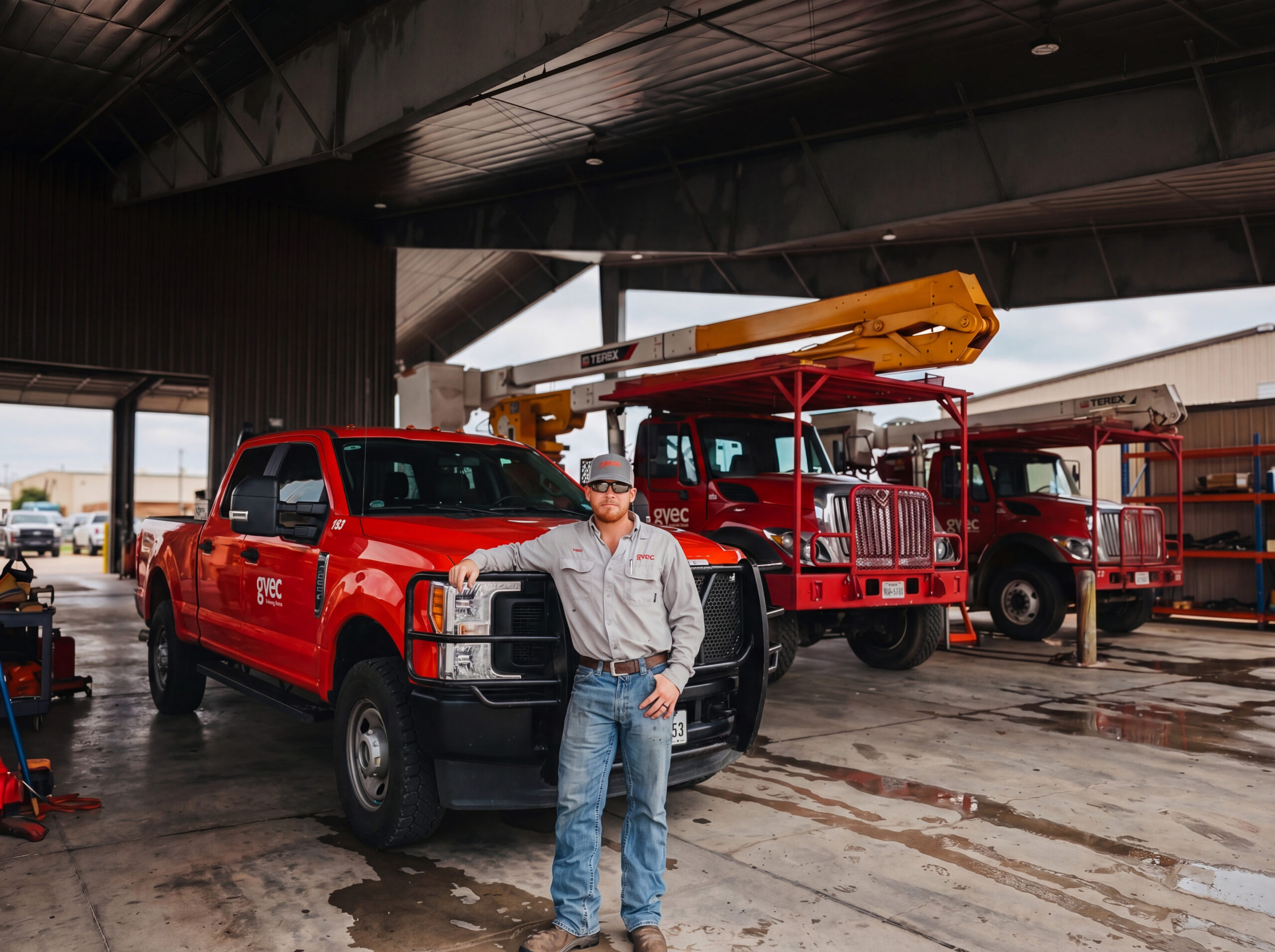
No two linemen come into the trade exactly the same way.
Some knew early this was what they wanted to do. Others found their way here through family, opportunity, or simply the kind of work that fit them best—hands-on, outdoors, challenging, and different every day. But no matter how they got started, the stories from GVEC’s linemen point to the same truth: linework takes grit, trust, sacrifice, and pride in doing work that matters.
For some, the path was clear from the beginning. Ethan Walpole started working with a contractor while still in high school and knew this was the job for him. Denver Evans said he wanted to work with electricity, be outside, and enjoy a change of scenery. For others, the trade found them another way. Blake Hillman came into it after encouragement from his uncle, who worked for GVEC at the time. Myles Pate said the trade “found him” through a family friend. Adam Ramirez worked his way up after starting on the right-of-way crew, even though he did not originally picture himself as a lineman, due to his fear of heights. And for Chris Cisneros, the job connected with something familiar from his years in the Marines: a hazardous job with risk and reward, and a strong sense of brotherhood. Another fun fact, both Denver and Adam played college baseball before beginning their careers at GVEC.
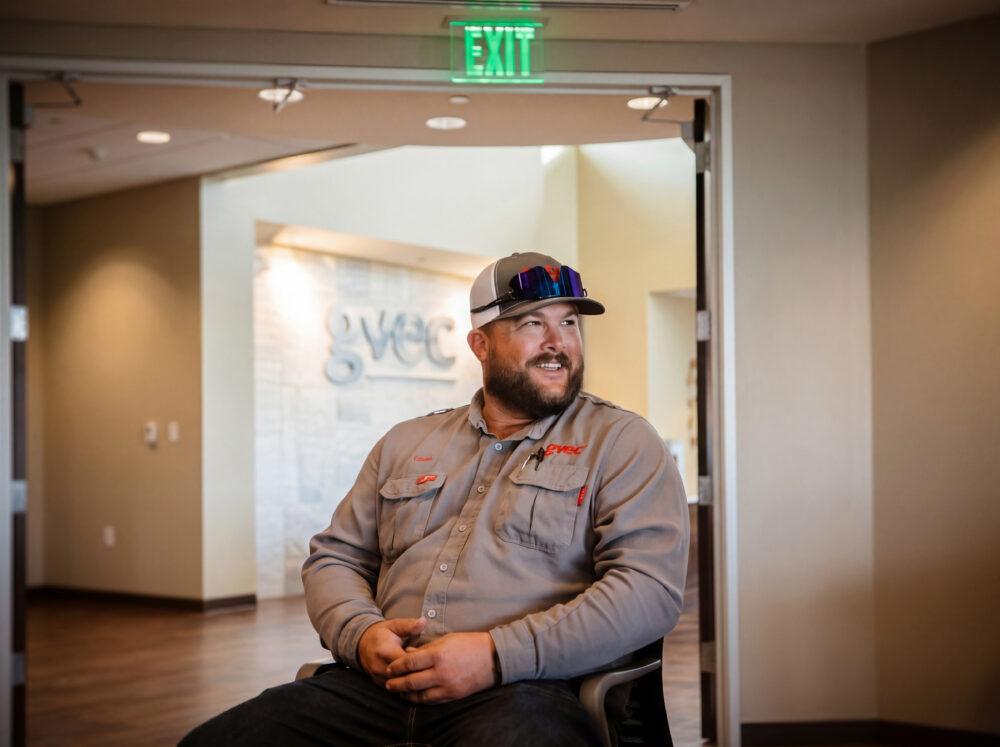
That natural team player attitude came up again and again in their responses.
Ask what keeps a lineman coming back after 5, 10, or 25 years, and the answer is not just the work itself. It is the people—camaraderie, teamwork, and consistency. Chris said his crew always has each other’s back, both on and off the job. “You can call on any one of them for help, anytime”, he said. Ethan used a familiar phrase at GVEC, “being a lineman means being your brother’s keeper,” because in this line of work, “you trust your crews by putting your life in their hands.” Denver, Blake, and Myles described the bond as family, friendship, and loyalty. Those bonds are not a bonus–it is part of what makes the job possible.
And bonds like this are earned over time.
The early days on the job are humbling. They are hot, overwhelming, nerve-racking, and sometimes a little funny in hindsight. Blake says his first day was just a blur spent in the August heat. Myles remembers lots of moving parts. Ethan was nervous. Chris performed a task incorrectly while his coworker waited for him to get it together. Adam will never forget his first climb up a service pole. And Denver’s first-day memory may be the most memorable of all: he hadn’t packed a lunch, and the crew spent the day out in the field. So, he ended up eating wild dewberries growing in the pasture to tide him over. Rookie lesson learned: at all times, but especially when responding to an outage, a good lineman always keeps a few essentials on hand: snacks, caffeine, and nicotine.
The work itself hasn’t changed much over the years, but better days are here.
They pointed to improvements in safety practices, technology, and response. Communication is faster, paper maps have become iPads, and protocols are more streamlined. Several said the response today is faster and safer than it used to be. The men themselves have grown in their roles, too. With more experience comes a different mindset. Chris put it this way, “more to lose, less to prove.” Adam, now 25 years in, described the shift in his role evolving from player to coach.
The work is still physically and mentally demanding. The weather, wild animals, and other dangers are still very real.
Something they wish more people understood.
More than one lineman wanted to clear up the same misconception: restoring power is not as simple as flipping a switch. There is planning behind every response—staging crews, positioning trucks, following protocols, assessing hazards, and working step by step to get the job done safely. As Denver put it, “electricity is a silent killer.” That reality never changes.
They also wanted people to understand that the job does not begin and end with outages. These crews are not sitting around waiting for bad weather. Their days are filled with building jobs, maintaining equipment, and doing the work that keeps the system running before trouble ever starts. Adam said it plainly, “We’re linemen, not firemen.” Blake echoed that same idea, pointing to the long list of responsibilities they handle every day beyond emergencies. And Myles made clear that outage response is always “a team effort”, involving not only the line crews but also the control center and customer service team behind the scenes.
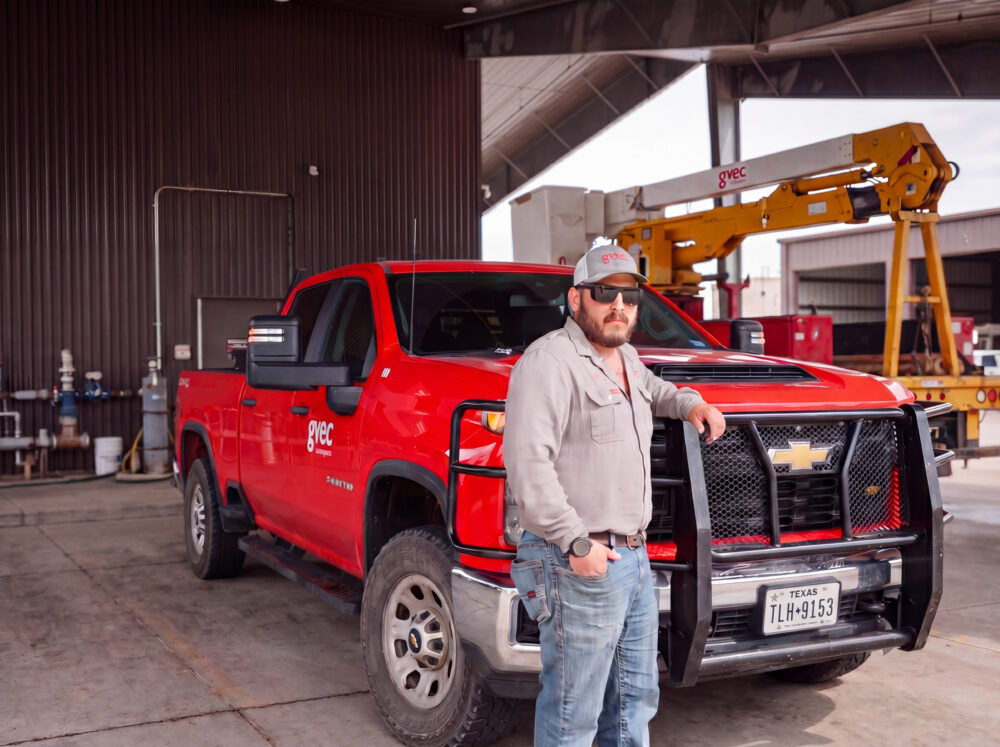
The job also asks a lot from families at home.
More than one respondent mentioned the importance of a strong support system, especially during long outages and major storms. During Hurricane Harvey, several of them recalled not going home for days, leaving their wives and families to manage without them. Loved ones are part of the story of linework, too.
Every lineman had a story that stuck with him—freezing storm calls, brutal heat, poles on the ground, flying debris, long nights, holiday outages, missed birthdays, and major events like Hurricane Harvey and Winter Storm Uri. Some moments were especially hard. For Ethan, one of the toughest was having to keep working after a coworker was injured on the job, all while not knowing how he was doing. Some moments were sweet, like the time Blake rescued a cat and returned it to some very happy owners. Others were about the unsettling or downright dangerous things that can happen in the wee hours of the night.
And then there is the moment every member knows—the lights come back on.
For most of the linemen interviewed, the feeling in that moment came down to one word: relief. Relief that the problem is solved, and the members are back on. Adam answered it a little differently, and maybe in the most lineman way possible: “Where’s the next one? Let’s finish the race.” That answer says a lot about the people who do this work.
When asked to describe a lineman in one word, their responses were unified: grit.
Grit, loyalty, toughness, self-discipline, a good attitude, and the willingness to keep going when the work gets hard. They talked about having a strong support system at home, a thick skin on the job, and the ability to trust your crew and be worthy of that trust in return.
That sounds about right.
During Lineman Appreciation Month, we celebrate those who do the hard, often unseen work of keeping power flowing for GVEC members. Through heat, cold, storms, missed meals, long nights, and whatever else the day brings, they keep showing up. They do it for the work, for the crew, for the members, and for the pride of knowing they made a difference.
We’re grateful for every one of them.
Where Grit Meets the Grid
Denver Evans, Lineman, Southern Operations Center
Denver Evans was drawn to linework six years ago by the chance to work with electricity, be outdoors, and do something different every day. He says one of the best parts of the job is the family built with the crew along the way.
Chris Cisneros, Journeyman Lineman, Southern Operations Center
Chris Cisneros started at GVEC 9 years ago, after serving in the Marines, where he found a similar brotherhood in linework. He says the job takes loyalty, toughness, and a strong support system both on the crew and at home.
Ethan Walpole, Journeyman Lineman, Western Operations Center
Ethan Walpole has been in the trade since high school. 15 years later, at GVEC, he says trust is still everything. Technology may change, but being your brother’s keeper never does.
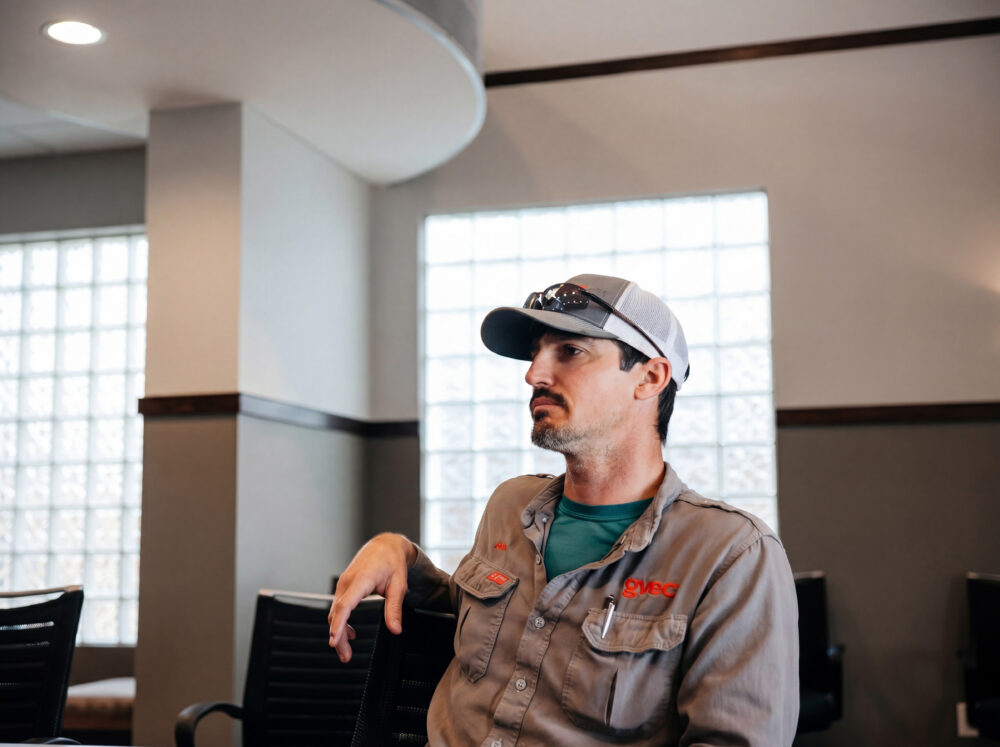
Blake Hillman, Journeyman Lineman, Western Operations Center
Blake Hillman came to the trade 19 years ago through family and found a career built on teamwork, friendship, and loyalty. He says hearing members’ thanks after an outage makes the work especially rewarding.
Myles Pate, Journeyman Lineman, Gonzales Office/Southern Operations Center
Myles Pate says linework found him over 17 years ago, and he has stayed for the people, the purpose, and the strong working environment. His advice for younger apprentices: have self-discipline and be ready to dig deep. Top of Form
Adam Ramirez, Journeyman Lineman, Gonzales Office
Adam Ramirez has spent 25 years in the trade and has seen plenty change, from technology to his own role as a mentor. When the lights come back on, his mindset is simple: “Where’s the next one? Let’s finish the race.